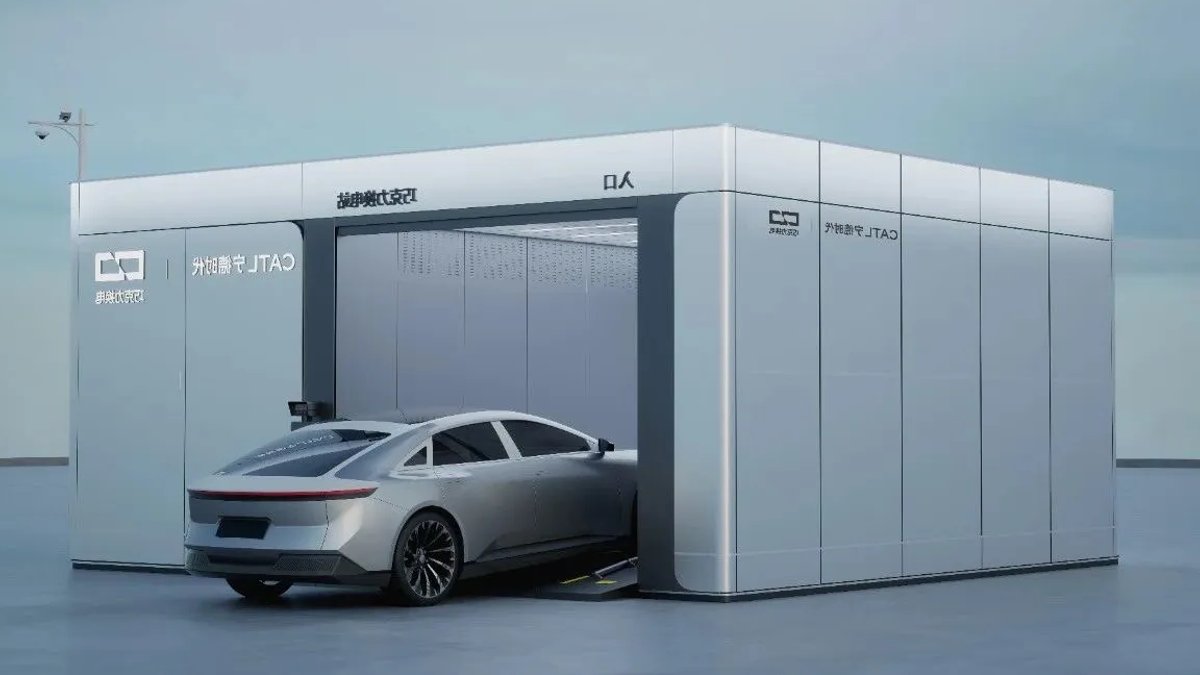
Chinese battery manufacturer CATL and electric vehicle maker Nio are set to build what they call the world’s largest network for EV battery swapping, expanding a partnership that began last year.
Joint network with parallel operations
The two companies confirmed on Tuesday they will coordinate efforts to deploy swapping stations across China, though they will initially run separate networks. Over time, their operations will overlap more, according to statements from both firms.
CATL’s Chico-Swap technical standards will be used in EVs from Nio’s new budget brand, Firefly, which debuted during Nio Day 2024. The companies also plan to work toward national standards for the technology in China, aiming to make it compatible with other automakers.
As part of the deal, CATL is investing 2.5 billion yuan—about $345 million—into Nio Power, the automaker’s unit handling charging and swapping infrastructure.
China leads in adoption
Nio has long been an outlier among Chinese automakers for its commitment to battery swapping, even after fast-charging networks became widespread. The company says it has already built 3,172 swapping stations in China, including 1,000 along major highways connecting over 700 cities.
Related: CATL and Nio plan largest battery swap network
A handful of automakers, including Volvo and Polestar, have adopted Nio’s swapping tech on a limited basis. Several Chinese brands are also testing or integrating it into some models. Outside China, the concept remains rare, with most automakers favoring fast-charging infrastructure.
This partnership could change that. If successful, it might push the technology beyond China’s borders, though for now, the focus is on scaling within the country. The question isn’t just about technology—it’s whether other automakers will adopt a system that requires them to standardize battery designs and share infrastructure.
In the U.S., Ample, a California-based startup, is trying to revive large-scale battery swapping with a modular system designed to work across different vehicle models. But so far, no major automaker has committed to the approach at scale.
CATL and Nio’s move also reflects a broader shift in China’s EV industry, where collaboration between suppliers and automakers is becoming more common. If the network succeeds, it could set a precedent for how battery swapping evolves globally—or confirm that fast charging remains the dominant solution.


