
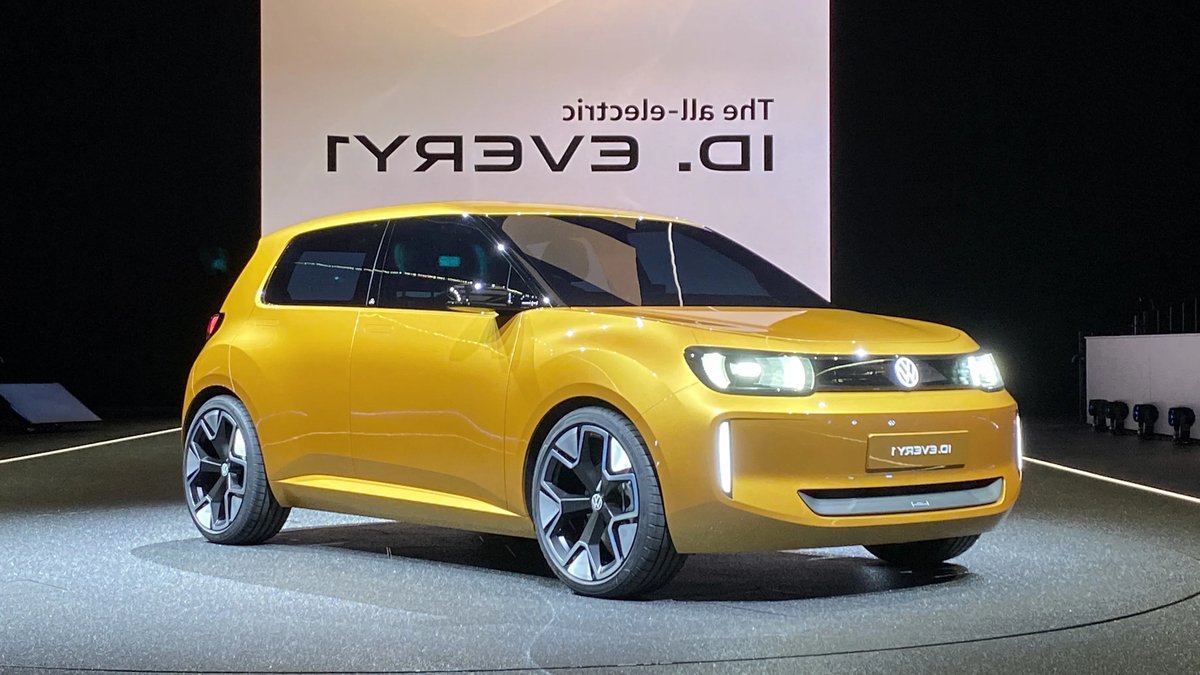
Volkswagen is set to launch its cheapest electric vehicle, the upcoming ID.1, at a price near 20,000 euros (about $22,000), a move that could reshape the market for low‑cost EVs.
It targets budget‑conscious buyers.
Design and pricing strategy
Volkswagen unveiled the ID.Every1 concept in Düsseldorf this month, a preview of the production model that will hit the market in 2027. The concept’s sleek silhouette, 19‑inch wheels, and a roof that dips in the middle give it a distinctive “double‑bubble” look, according to design chief Andreas Mindt. He stressed a “super clean” body with no cladding, extra plastics, or painted details, arguing that removing visual clutter makes the car look better, not cheaper.
Pricing the ID.1 at roughly 20,000 euros required a series of cost‑cutting decisions. The vehicle will use a 70‑kW (94‑hp) front‑wheel‑drive motor, a smaller battery supplied by Chinese manufacturers, and a torsion‑beam rear axle borrowed from the current Polo. These choices trim the overall length to 152.8 inches, shaving off over‑hangs compared with the earlier ID.2 concept.
Rivian‑inspired zonal architecture
Beyond its low price, the ID.1 will be the first Volkswagen model built on the group’s new Scalable Systems Platform (SSP), a modular “zonal” electrical architecture derived from the partnership with Rivian. Volkswagen will apply this architecture across EVs ranging from small city cars to larger, more luxurious models.
Related: Honda unveils energy-saving dealership standards
Future SSP vehicles, like the planned ID Golf slated for 2028, will benefit from the same core components while adding more sophisticated driver‑assistance features and over‑the‑air update capabilities. The ID.1 will still support OTA updates.
What the low‑cost EV means for everyday drivers
For city dwellers, the ID.1 offers a practical range of at least 155 miles under the WLTP cycle, comparable to the earlier e‑Up’s 150‑mile capability. Its modest battery size and front‑wheel‑drive layout keep weight around 2,700 pounds, aiding efficiency in stop‑and‑go traffic. The cargo space, roughly 410 liters, exceeds that of today’s Golf, providing room for two cases of groceries or a couple of suitcases.
The vehicle’s modest price could make electric driving accessible to a broader segment of the population, especially in Europe where subsidies often hinge on cost thresholds. By leveraging a proven chassis and a shared software platform, Volkswagen aims to deliver a car that feels modern without the premium price tag. Consumers looking for a straightforward, low‑maintenance EV may find the ID.1 an appealing entry point.
While the ID.1 won’t be sold in the United States, its impact on the global EV market could be significant. If the pricing and technology goals hold, other manufacturers may feel pressure to streamline their own architectures and pricing models, potentially accelerating the rollout of affordable electric mobility worldwide.


