
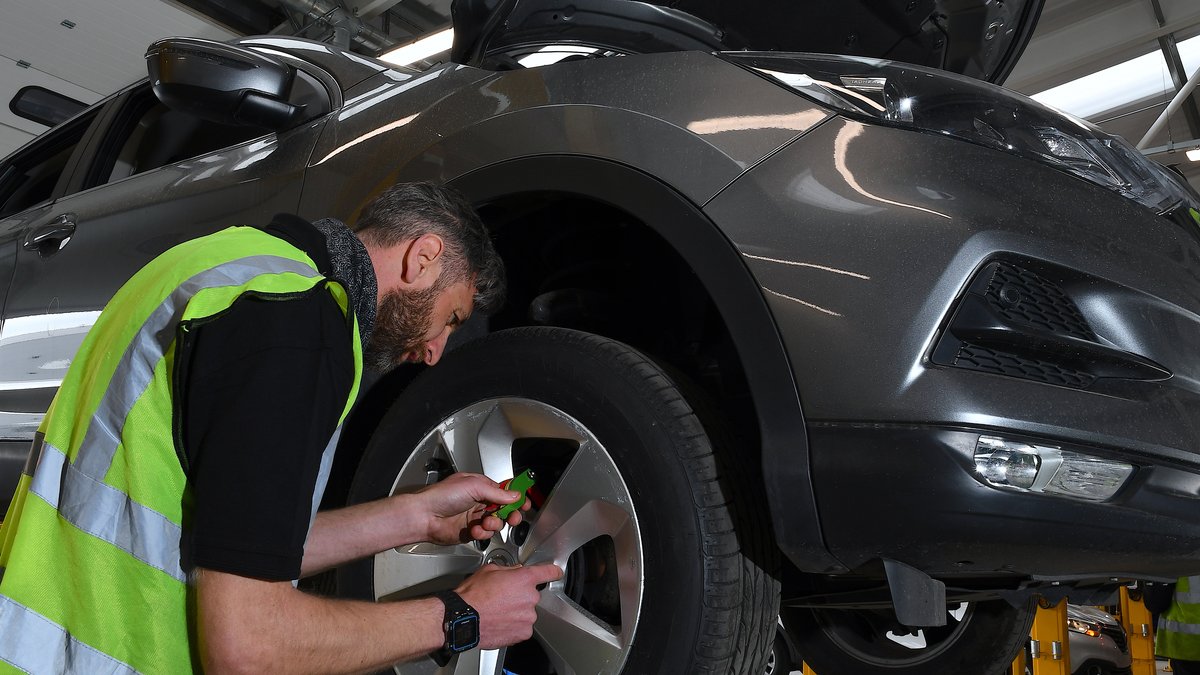
Fleets are experiencing major delays with warranty work, with wait times allegedly reaching up to five months. Mark Sinclair, downtime management specialist at leasing firm Ogilvie Fleet, said such delays are “not unrealistic… particularly with the premium manufacturers.” This situation has led leasing companies to take independent action to keep vehicles operational.
Ogilvie Fleet, for instance, has resorted to handling repairs independently, paying for work, and seeking out franchised garages with availability, even if it means sending vehicles long distances. Sinclair stated, “We, as the leasing company, now have to do most of the work in terms of finding a garage that’ll take the vehicle a lot sooner than that. We don’t have any problem sending a vehicle to Nottingham, for example, if it’s based up here in Stirling [Ogilvie’s HQ] if we can’t get it into a [local] garage.”
Leasing Companies Step In
Sinclair explained, “We’re almost taking things into our own hands. We sometimes just need to spend the money and bypass the warranty on these vehicles to make sure that people are getting the product that they lease from us. Do we want to put a customer in a position where they’re waiting weeks for a repair just to utilise a warranty, or do we put our hands in our pockets?” Ogilvie’s efforts have resulted in a 17% or 3.6-day reduction in average vehicle off-road times for 2024-2025, from 21.4 days to 17.8 days. Their longest downtime case last year was 225 days, down from 412 days, and the percentage of incidents over 30 days old decreased from 19.6% to 16.6%.
Read Also: Volvo expands XC60 and XC90 range with new plug-in hybrid
Parts and Technician Shortages
A long-term parts shortage, caused by the pandemic and international conflicts, is the main reason for these delays. Technician shortages, especially for electric vehicles (EVs), worsen the issue. The Institute of the Motor Industry reported that only 35% of technicians were qualified to work on EVs by the end of 2025, with a projected shortage of over 43,000 technicians by 2035. Epyx reported that overall fleet downtime for non-warranty work fell to its lowest level since before the pandemic, with average off-road times of 1.46 days in January, 1.47 days in February, and 1.53 days in March, down from peaks of 1.83 days in May 2023 and November 2025, and 1.91 days in December 2025.
Warranty Policies and Dealer Constraints
Martin Nørgaard Høgh, CEO of Tjekvik, noted that OEM warranty policies often hinder proactive service. He said, “In many cases, it actually conflicts with the brand requirements to be proactive toward warranty work… most OEMs have a requirement in their dealer contract saying you cannot approach a customer to do a warranty case, because they don’t want to just pay money out for warranty work. It has to be the customer who makes the claim and then you can bill reactively, even though that’s a worse customer experience.”
Epyx’s data, which excludes warranty work, shows fleet use of franchise dealers for service, maintenance, and repair (SMR) fell to 41% in the first quarter of this year, down from 54% in January 2020.
Read Also: Skoda Epiq offers practical, affordable electric crossover
Shifting Repair Trends
Fleets are increasingly using non-franchised workshops and green or recycled parts when possible. Vincent St Claire of Fleet Assist asked, “Rather than having a van sitting there waiting for a door mirror – and it doesn’t have to be body parts, they can be mechanical as well – if you can source a green part, why wouldn’t you?” However, Caroline Sandall-Mansergh of Alphabet noted that warranties often limit the use of non-standard parts, especially for younger vehicles. She said, “From a leasing company perspective, we have to be very mindful… they might be available, but what are the protections and the guarantees, and how do we make sure that it [the part] doesn’t immediately destroy the warranty?
For some fleets, where they might have older vehicles that are out of warranty, then your potential to have the non-standard approach is obviously greater. But when you deal with young vehicles, that is a real challenge to overcome, and manufacturers clearly will fiercely protect that element of their supply chain.” Average hourly rates for franchise dealers rose by 32% from £70 in January 2020 to £93 in March 2026, while non-franchise workshops increased by 27% from £43 to £55 in the same period.


