
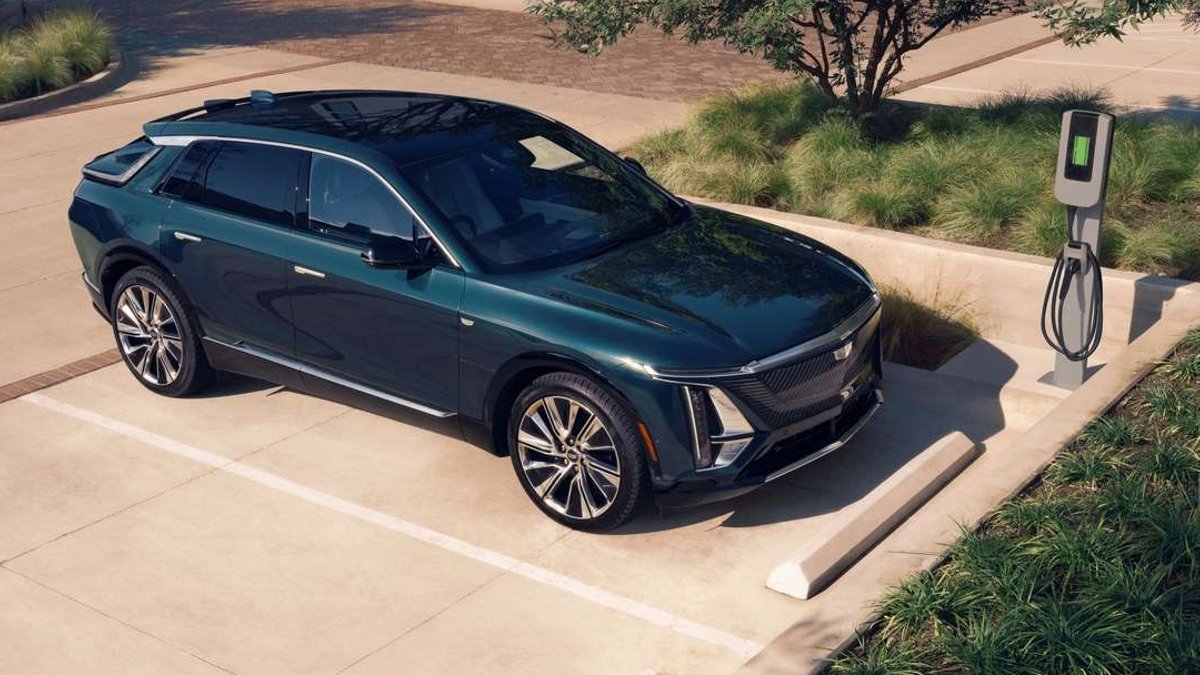
A Cadillac Lyriq owner took to Reddit to complain about software updates, app reliability, and whether their expensive electric vehicle would actually improve after purchase. Other owners reported mixed results, with some finding remote start worked fine, making it difficult to determine if the issues were widespread or isolated. GM has since announced a new wave of over-the-air updates for 2025 and 2026 models, but the user’s underlying frustration highlights a shift in how customers experience vehicle development.
Software-defined vehicles have made the internal pace of an automaker visible to the driver. In the past, a delay in Detroit could be absorbed between model years, but now owners can watch competitors add features or fix interfaces while their own car remains stagnant. This creates a feeling of organizational latency from the driver’s seat, even if a specific complaint about a Lyriq update cannot be directly blamed on corporate structure.
Related: Audi RS3 Upgraded with New VMR Wheels
That visibility matters more than ever because GM is rebuilding parts of itself inside a market where waiting is expensive. The Detroit automaker recently signed a 20-year extension of its joint venture with SAIC, keeping SAIC-GM operating through 2047. The agreement notes that the Pan Asia Technical Automotive Center, or PATAC, now holds core decision-making authority over product definition and technical direction, rather than merely adapting foreign designs. This means future locally developed products will be defined and engineered in China before reaching global markets.
This shift marks a profound change for GM in China. The Buick Xiao Yao architecture was developed by PATAC specifically for the local market to accommodate battery-electric, plug-in hybrid, and extended-range vehicles across multiple body styles. When introduced in 2025, Buick planned to launch six new-energy vehicles from this platform within 12 months. The E7, another locally developed model, became the fastest new-energy vehicle from a joint-venture brand in China to exceed 10,000 deliveries and is now scheduled for export.
Related: Stunning Estoril Blue BMW M240i hits the road
Decision Latency and Approval Chains
The approval chain represents the biggest bottleneck. Engineers do not necessarily work faster, but the organization must stop spending time in queues between departments. A product planner cannot spend months waiting for certainty, and the software team cannot treat the start of production as the moment development ends. Manufacturing must begin preparing while other parts of the car are still moving, requiring validation to happen in parallel rather than as a final step.
Volkswagen tested a similar approach in China and reported cutting vehicle-development cycles by as much as 30 percent. The automaker achieved this by running software, hardware, and validation in parallel and shortening decision loops without changing the validation cycle itself. The experiment shows that reducing decision latency is often more effective than increasing the intensity of individual labor.


