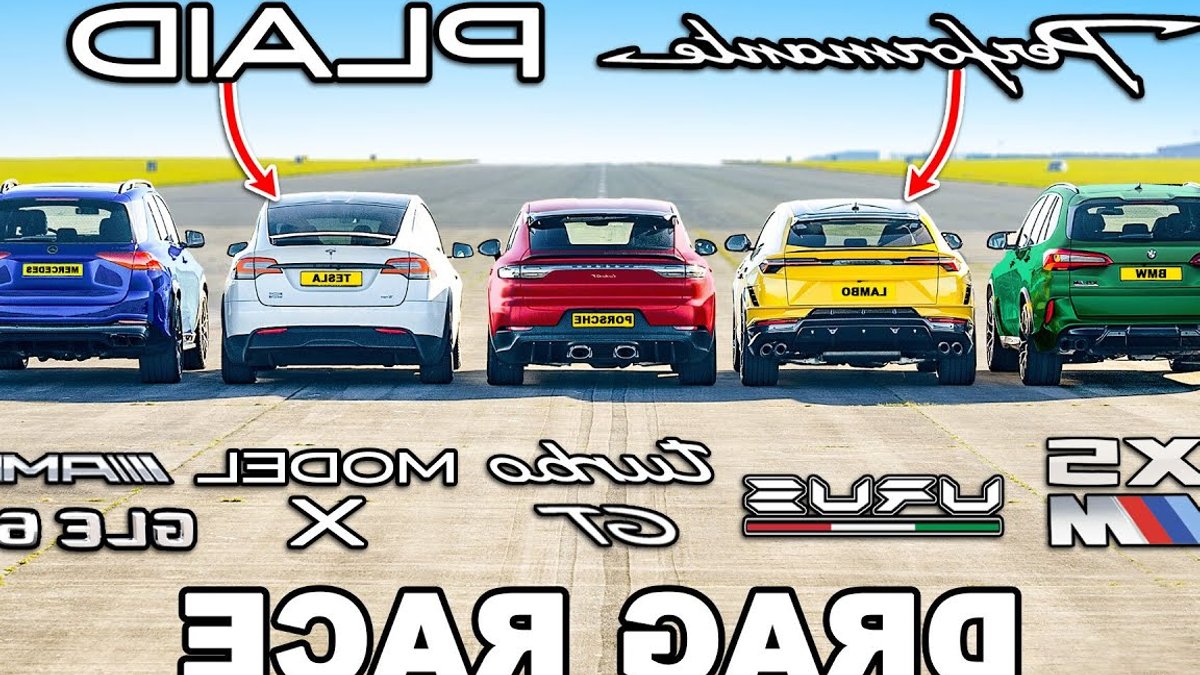
The world’s fastest SUVs faced off in a high-speed drag race featuring the Lamborghini Urus Performante, Tesla Model X Plaid, BMW X5 M, Porsche Cayenne Turbo GT, and Mercedes-Benz GLE 63 AMG. The CarVow video showcases these vehicles lining up for a straight-line showdown, pitting the all-electric Tesla against several traditional combustion engine competitors.
An All-Electric Contender in the Mix
The lineup includes the Tesla Model X Plaid, which seats seven people and serves as an all-electric performance vehicle. The race pits this electric juggernaut against the Lamborghini Urus Performante, BMW X5 M, Porsche Cayenne Turbo GT, and Mercedes-Benz GLE 63 AMG. Each car brings a distinct approach to high-speed acceleration.
The Tesla Model X Plaid delivered strong acceleration despite its heavy size. The video highlights its power output, which allows it to compete with some of the most capable SUVs on the market. However, the race revealed a significant weakness in the Model X Plaid’s braking performance.
Related: Luxury Mercedes S63 AMG showcased with custom wheels
Braking Performance Raises Questions
The Tesla Model X Plaid struggled to stop as quickly as its rivals. In the video, the other vehicles came to a full stop well before the Tesla did. This disparity in stopping power suggests that the stock braking system may not be sufficient for sustained high-speed driving.
Owners of the Model X Plaid might want to consider upgrading their braking components. The text notes that the stock system appears to be lacking, and installing a big brake kit could improve stopping distances significantly. The other SUVs in the race demonstrated superior braking capability, allowing them to halt quickly and safely.
This braking issue highlights a common challenge for high-performance electric vehicles. While electric powertrains often excel in acceleration, thermal management of brakes can become a bottleneck when stopping from high speeds. The Tesla’s performance in the drag race was impressive, but its inability to match the braking times of the Urus Performante and others is a notable drawback.
Comparing this race to other high-performance SUV showdowns reveals a recurring theme: the balance between acceleration and stopping power. In previous tests of similar vehicles, the gap between top speed and braking capability has often determined the overall winner. The Tesla’s strong start was impressive, but its inability to match the braking times of the Urus Performante and others is a notable drawback.
Related: Dominic Marcu’s Tesla Plaid Hillclimb Build Is Stunning
A Race of Contrasts
The race showcased the diverse engineering found in modern SUVs. The Lamborghini Urus Performante, Porsche Cayenne Turbo GT, and Mercedes-Benz GLE 63 AMG all demonstrated strong acceleration and reliable braking. The BMW X5 M also held its own in the lineup, offering a mix of performance and practicality.
The Tesla Model X Plaid, despite its impressive speed, was left behind in the braking department. This discrepancy raises questions about the long-term reliability of the vehicle’s braking components under heavy use. The video does not reveal the final results of the race, but the braking performance alone offers a clear insight into the strengths and weaknesses of each vehicle.
Ultimately, the race highlights the ongoing evolution of the SUV market. Electric vehicles are increasingly entering the performance segment, but they still face challenges in areas like braking. The Tesla Model X Plaid’s performance in this drag race was impressive, but its braking issues suggest that owners should be cautious about pushing the vehicle to its limits.


