
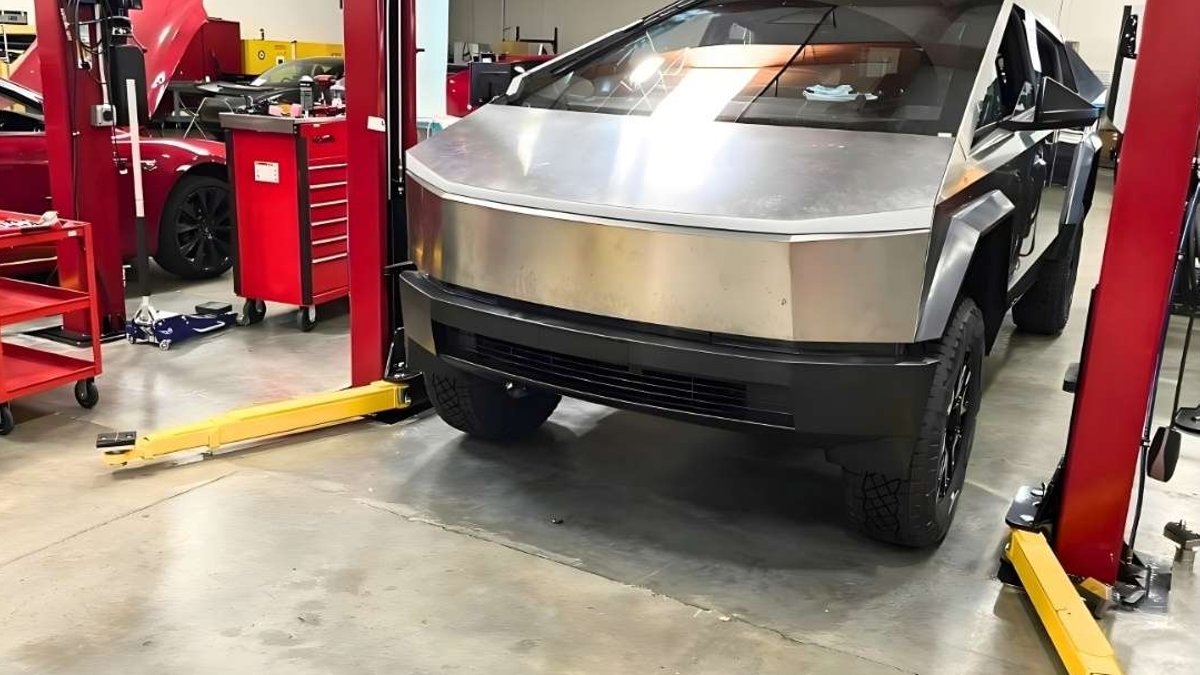
A Cybertruck owner from Florida says he is considering selling his vehicle after facing $7,000 in major repairs within two months. The owner, identified as Doug, claims that his vehicle is facing costly repairs after it passed the 50,000-mile basic vehicle warranty cutoff.
Doug says that in the past two months, he has had two major failures, with repairs totaling over $7,000. Now, he’s considering getting rid of the truck as he no longer believes he can afford the repair costs. The frustrated owner shared his thoughts on the Cybertruck Owners Club forum.
“I’m at the point where I need to ask other Cybertruck owners whether this is becoming a pattern — and how anyone has successfully gotten Tesla to stand behind these vehicles once the basic warranty expires,” Doug wrote.
“I purchased a Foundation Series Cybertruck, paid a substantial premium to be an early adopter, and now feel I’m being asked to personally fund Tesla’s ongoing engineering and reliability problems.”
Related: Vehicles Rarely Seen in Japan After Two Weeks
About 6 months ago, the PCS had to be replaced (done under warranty). Now, at only 56,606 miles — just 6,606 miles beyond the basic warranty — he’s dealing with yet another PCS/BMS-related failure.
Tesla says a wiring harness associated with the AC-to-DC power conversion system has failed and that the repair is customer pay: approximately $4,700 PLUS TAX.
Tesla’s warranty extension and the wiring harness issue
This is already frustrating, but Doug adds that this is his second major repair in just two months. Two months ago, right after his vehicle passed the 50,000-mile limit of the basic warranty, his air suspension failed.
Tesla first quoted him $5,000 for the repair, but because the failure occurred right after the warranty expired, they felt sorry for him and reduced the price to $2,300.
“And this isn’t my first major out-of-warranty surprise. Just two months ago, the air-ride suspension failed. Tesla initially quoted me nearly $5,000 for that repair because the warranty had just expired. After some discussion, they apparently felt generous and reduced my cost to $2,326. Now, two months later, here comes another $4,700+ repair.
Related: Porsche 911 GT3 gets Vossen forged lightweight wheels
At what point does Tesla acknowledge that an owner shouldn’t be responsible for repeated failures of major vehicle systems immediately after the warranty expires — particularly when one of those systems has already required repair?
Tesla has recently extended the warranty for early Cybertruck models with power conversion system issues to 150,000 miles or 8 years. However, according to Doug, Tesla is claiming that the problem isn’t with the power conversion system itself but with the wire harness connected to the PCS, which means he will need to cover the repair costs himself.
“I didn’t buy a ten-year-old high-mileage vehicle. I bought a premium-priced Foundation Series Cybertruck, and at 56,606 miles I’m looking at thousands upon thousands of dollars in major repairs. I am currently appealing this latest charge to Tesla “management” and asking them to cover the repair.
In his opinion, Tesla should cover this 100% as goodwill, especially considering the previous PCS replacement, the extremely low mileage beyond warranty, the recent suspension failure, and the premium paid by Foundation Series customers.
Related: Lincoln’s New Bronco-Based SUV Brings Much-Needed Attitude
For those who have dealt with something similar, Doug asks: Has anyone successfully escalated a major post-warranty Cybertruck repair beyond the Service Center? Is there a regional service manager, executive customer-relations group, or other escalation path that actually gets results? He is interested in constructive suggestions because paying another $4,700+ for a major system failure at 56,000 miles is simply not an acceptable resolution. At this point, the alternative is becoming painfully obvious: stop throwing money at a vehicle I can no longer trust and replace it with something more reliable.
Diagnosis points to a wiring issue
Doug shared a picture of his Cybertruck center touch screen in service mode. The Service Mode diagnosis reads: “AC voltage is not present while the Power Conversion System (PCS) is expecting AC voltage to be provided by the external charging equipment.”
As we can see from the vehicle’s own diagnosis, the issue doesn’t appear to be with the power conversion system but rather with the wiring harness that delivers AC power to the PCS. During home charging, power from the outlet travels through the charge port to the PCS. Since electric vehicle batteries store DC power, the PCS converts the AC power to DC power for storage in the batteries. However, according to the vehicle’s own diagnosis, the PCS unit is not receiving AC power, even though the vehicle is plugged into the charge port. This suggests the issue isn’t exactly a PCS failure, and Tesla will likely refuse Doug’s request to fix it for free.
Whatever the cause of the failure, Doug is certainly not happy with his out-of-warranty ownership experience. The frustration is compounded by the fact that the vehicle is relatively new, having only 56,606 miles on the odometer. Owners of high-performance vehicles often expect some premium for reliability trade-offs, but the rapid succession of expensive failures for a vehicle with low mileage presents a unique set of challenges for prospective buyers. The situation highlights the tension between the allure of early adoption and the practical realities of warranty coverage in the electric vehicle market.


