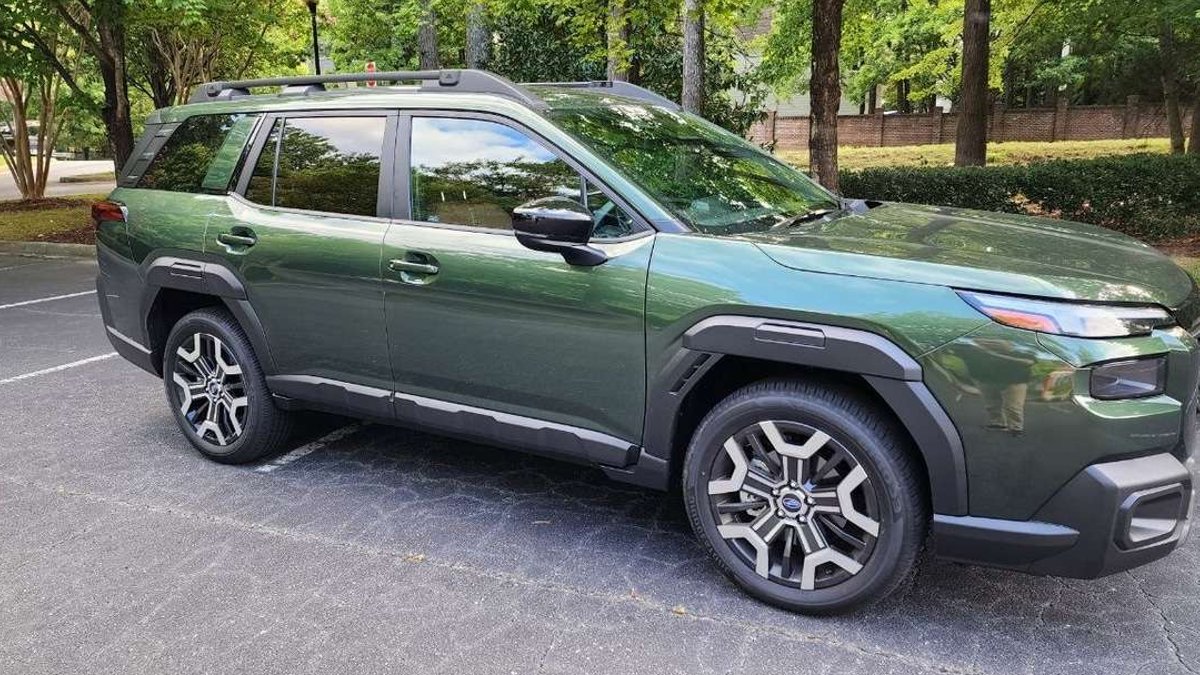
A three-time Subaru owner drove 150 miles round trip to purchase a third Outback, but the redesign nearly stopped her at the dealership. At just under five feet tall, the boxier body style makes it more challenging for her to look out over the hood at all, even with multiple seat adjustments. The increase in height for clearance was also quite noticeable for her.
Visibility Challenges For Short Drivers
Lucy Schmidt wrote the following under that article. “On Friday (3 days ago) I drove 2.5 hours to my nearest Subaru dealer to purchase my 3rd new Subaru outback touring since 2015. I was disappointed with the change in body style. At just under 5 feet tall, the boxier body style makes it more challenging for me to look out over the hood at all even with multiple seat adjustments.”
The old Outback built its reputation on this exact strength. Consumer Reports has repeatedly ranked the Outback as the best midsize SUV in the country for outward visibility, largely because the low mounted Boxer engine let the hood slope downward in front of the driver. That same downward sloping hood is why the Outback and Forester have shown up for years on lists of the best SUVs for short drivers, including a Consumer Reports tester who is 5 foot 1 inch tall and specifically evaluates hood visibility during every test drive. A taller, boxier front end works against that advantage, even when the seat itself adjusts correctly.
Related: Ram Revives ProMaster City Van at Low Price
Subaru has also earned recognition on Kelley Blue Book’s list of the best cars for short drivers, a list that specifically credited the Outback’s 8.7 inch ride height for helping smaller drivers see the road ahead. If you are shorter and cross shopping the new Outback, do not skip a real test drive. Sit in the seat, adjust the mirrors, and specifically look for the top of the hood before you commit to an order, the same checklist we outlined when we asked whether the Outback could get any more comfortable according to Consumer Reports testers.
Older Outback and Forester models built this reputation over many years, which is why used examples still appear on lists of the best used cars for short drivers today. Shoppers who value that low, easy sightline may want to cross shop a lightly used previous generation Outback alongside the new one. The visibility issue is not just a personal gripe; it is a design choice that shifts the balance of utility. The higher ride height improves clearance for rough roads, but it physically blocks the forward view for anyone whose eyes sit below the dashboard. This trade-off is common in larger SUVs, but the Outback’s history as a wagon made the hood height a defining feature for many small drivers. The new design prioritizes cargo space and ruggedness over that specific sightline.
Starlink Subscriptions And Remote Start
Lucy’s second issue affects almost every current Subaru buyer, not just Outback shoppers. Subaru’s Starlink connected services now gate remote start behind a subscription tier, and this has generated confusion across owner forums for years, a pattern we first flagged when we asked whether buyers would tolerate paying a monthly fee for features like remote start.
Related: Pristine silver Porsche 993 Turbo turns heads
Subaru’s Companion and Companion Plus tiers, along with the older Safety Plus and Security Plus tiers, come with a free trial period, then roll into a paid subscription if you do not cancel. Remote engine start through the MySubaru app sits behind that same paywall, so once your trial lapses, the phone based remote start stops working unless you pay again. CoPilot has broken down the current pricing structure for owners trying to understand exactly what each tier unlocks.
The workaround Lucy is asking about, a traditional key fob remote start with no subscription attached, still exists at some dealers as a separate hardware installation. It typically costs several hundred dollars as an aftermarket add on rather than a factory feature. It is worth asking your dealer directly whether that fob based module can be installed before delivery, especially on a vehicle already in transit like Lucy’s, a concern that echoes the reliability questions we raised in our report on the 2027 Outback’s ground clearance and hybrid delay.
Buyers who plan to keep their Outback for many years, the way Lucy has with three straight models since 2015, should also factor in long term ownership costs like the CVT service concerns we detailed after one Outback owner faced an unexpected transmission repair bill well outside the powertrain warranty window.
Related: Mango Dodge Challenger Gets New ERA Wheels
Managing Orders And Negotiations
Lucy mentioned that her MSRP and trade in offer were not what she hoped for, and that disappointment is common right now. Dealer markups, regional demand, and a redesigned model in its first full year on sale all push negotiating leverage toward the dealer rather than the buyer. Our advice is simple and it applies well beyond Subaru. Get your trade in appraised independently before you walk into the dealership, bring that number with you, and treat the first offer as a starting point rather than a final answer.
Ordering a vehicle in transit, the way Lucy did to get her color choice, limits how much you can still request. Paint, trim, and factory options are locked once the vehicle leaves the port, but dealer installed accessories like a fob based remote start module can often still be added at the dealership before you take delivery. This is a good moment to ask your salesperson directly, in writing, whether the accessory can be installed and what it will cost, rather than assuming it will simply appear at pickup.


