
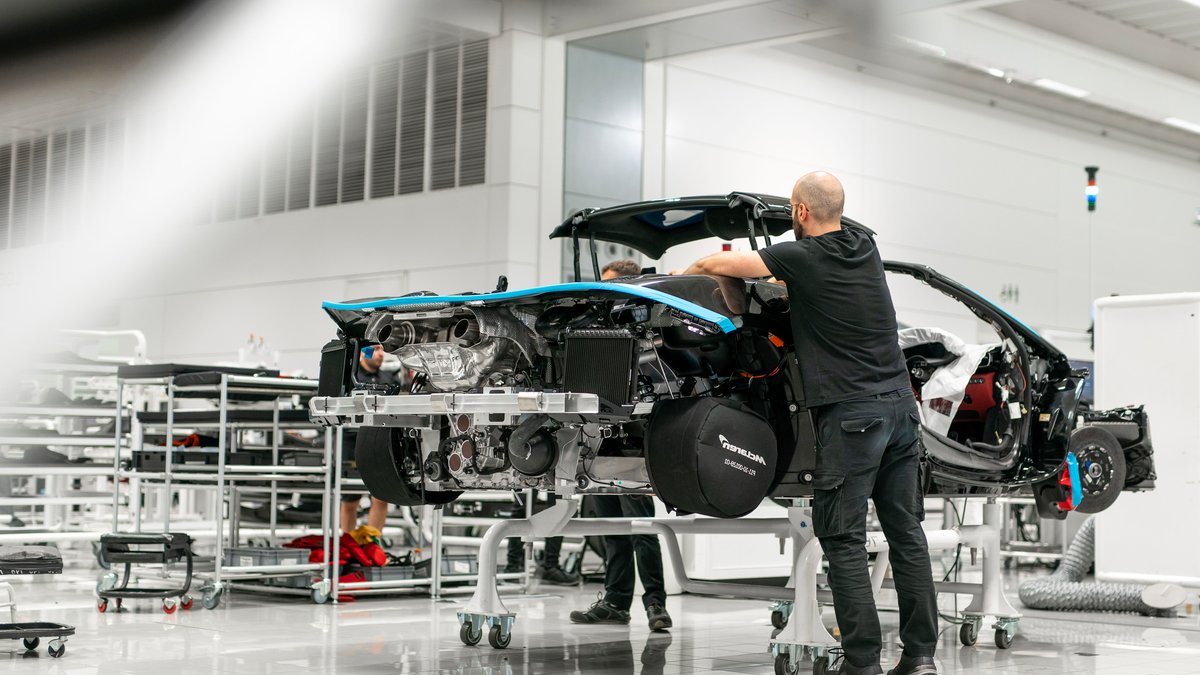
Despite the challenges facing the UK’s automotive sector, exemplified by Jaguar Land Rover’s decision to cut approximately 4,000 jobs, there are also signs of growth and investment. McLaren’s plans to create at least 1,000 direct jobs through a £500 million investment in a new UK production site, which will manufacture a range of models including a new SUV, are a notable example. Additionally, Nissan’s £170 million investment to introduce the Kicks model at its Sunderland plant will help secure jobs in the region. These developments show the diversity and excellence of British engineering, spanning the production of high-performance vehicles to more mainstream models.
Emphasis on traditional vehicles
The fact that both McLaren and Nissan’s announcements included statements from the prime minister and business secretary, respectively, suggests that the UK government is committed to supporting domestic manufacturing. However, these investments also raise concerns about the industry’s long-term prospects, as they focus primarily on combustion engine vehicles. McLaren has opted to delay its entry into the electric vehicle market, citing insufficient demand, while Nissan’s decision to produce the hybrid Kicks at its Sunderland plant is partly a response to the company’s reduced electric vehicle plans, which were scaled back due to slow sales growth.
Although Nissan remains a significant player in the UK’s electric vehicle market, with models such as the Leaf and Juke, and has invested in battery production facilities, the company’s shift in focus is notable. Meanwhile, Jaguar Land Rover is expanding its electric vehicle production capabilities in the UK, with plans to manufacture the Range Rover Electric, Range Rover GT, and Jaguar Type 01 in the Midlands.
The UK’s automotive industry faces competition from other countries, such as Spain, where the VW Group produces small electric vehicles and a new MG plant is under construction, with Chinese companies like Leapmotor and Geely also investing in existing facilities. Furthermore, Chinese firms are increasingly looking to establish electric vehicle factories in eastern Europe, where labor and production costs are lower. These developments, including MG’s new Spanish plant, represent a significant expansion of full-scale car manufacturing capabilities, a trend that has not been seen in the UK for decades.


