
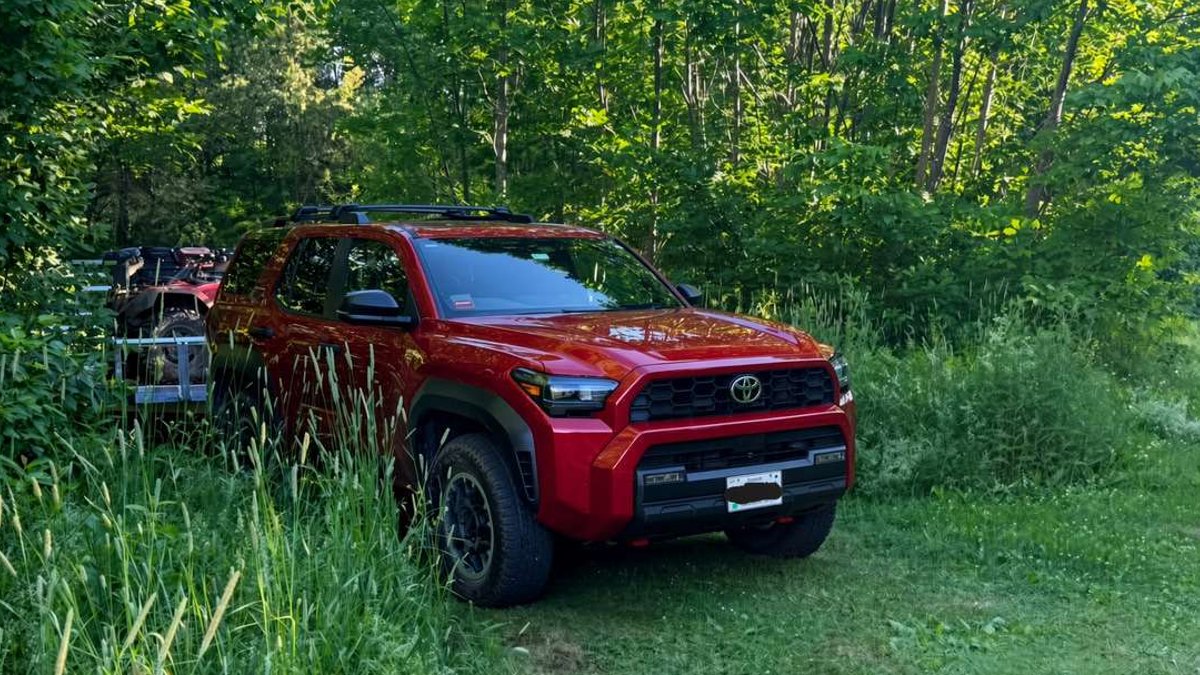
Ethan Hanna bought his 2026 Toyota 4Runner Off-Road Premium in March with every intention of keeping it for years.
The SUV drove well enough in most conditions, Hanna said, but something about the transmission felt off from the start. He describes the shifting as particularly harsh, worse when cold and still noticeable once the engine warmed up.
First Visit: No Problem Found
At around 4,500 miles, Hanna raised the issue during his first service appointment. According to his post in the Toyota 6th Gen 4Runner Owners group on Facebook, technicians could not duplicate the problem and sent him on his way after checking the fluid level.
That could have been the end of it. Hanna had already seen other sixth‑generation 4Runner owners describe similar shifting behavior in the same group, which made it reasonable for him to assume his SUV simply had an unfamiliar characteristic rather than a fault.
Related: Lucid’s Three Pivot Points Signal Success
Second Visit: A Different Answer
He returned to the dealer this week for an unrelated brake appointment and raised the transmission issue again, this time asking the dealer directly why that level of harshness should be considered within normal parameters.
The answer changed. Hanna says the dealer called two days later to tell him the transmission was operating beyond what Toyota considers a normal amount of harshness, and that it would be replaced under warranty.
Hanna’s own account is the only record of this exchange. It is not clear from his post what specific test or measurement changed the diagnosis between his two visits, and the dealer’s inspection notes were not reviewed.
Other Owners Report Similar Issues
Hanna’s post drew a reply from Victoria Coronado, another sixth‑generation 4Runner owner. Coronado says she noticed harshness around 4,000 miles, has brought her SUV in twice, and says the dealer has told her both times that it could not replicate the concern.
Related: Lincoln’s New Bronco-Based SUV Brings Much-Needed Attitude
Coronado wrote that she is “so scared” her situation matches Hanna’s, and said she now regrets the purchase after putting close to $25,000 into the vehicle. She adds one detail Hanna’s post does not include: the harshness was not present when she first drove the 4Runner off the lot and appeared only after a couple of months of ownership.
A third owner, Kristen Bieber, describes a faster and more dramatic version of the same outcome. She says her 2026 4Runner Limited threw a system malfunction error on its first day of ownership, and that the dealer called this week to tell her the entire transmission would be replaced.
Three different starting points, three transmission replacements or pending replacements. That is not enough to establish a defect rate across the sixth‑generation 4Runner lineup, and treating three owner posts as proof of a broader pattern would get ahead of what is actually known. What the posts do show is that a dealer’s inability to reproduce a complaint on the first visit is not the same thing as confirmation that nothing is wrong.
The redesigned sixth‑generation model entered a market where the outgoing version had spent over a decade building loyalty among owners for its mechanical simplicity. That reputation hangs over every early complaint about the new generation, and it explains why a single transmission replacement draws more attention than the same repair might receive on a vehicle with a longer track record.
Related: Subaru Owner Travels 2.5 Hours for Third Outback but Finds Hood Too High
What Owners Can Do
Document the behavior on the first visit, even if the dealer cannot reproduce it. A written record matters if the issue continues.
Treat “common” and “normal” as separate questions. Other owners reporting the same symptom is useful context, but it does not confirm a given vehicle is within specification.
Ask for a second inspection if the first one comes back empty. Hanna’s second visit produced a diagnosis his first one did not.
Use the warranty while it is active. A transmission replacement covered under warranty is a very different outcome than the same repair paid for after the coverage window closes.


